
22 Apr Pilgrimage After GPS
The Via Francigena is an old route, but I did not encounter it in an old way.
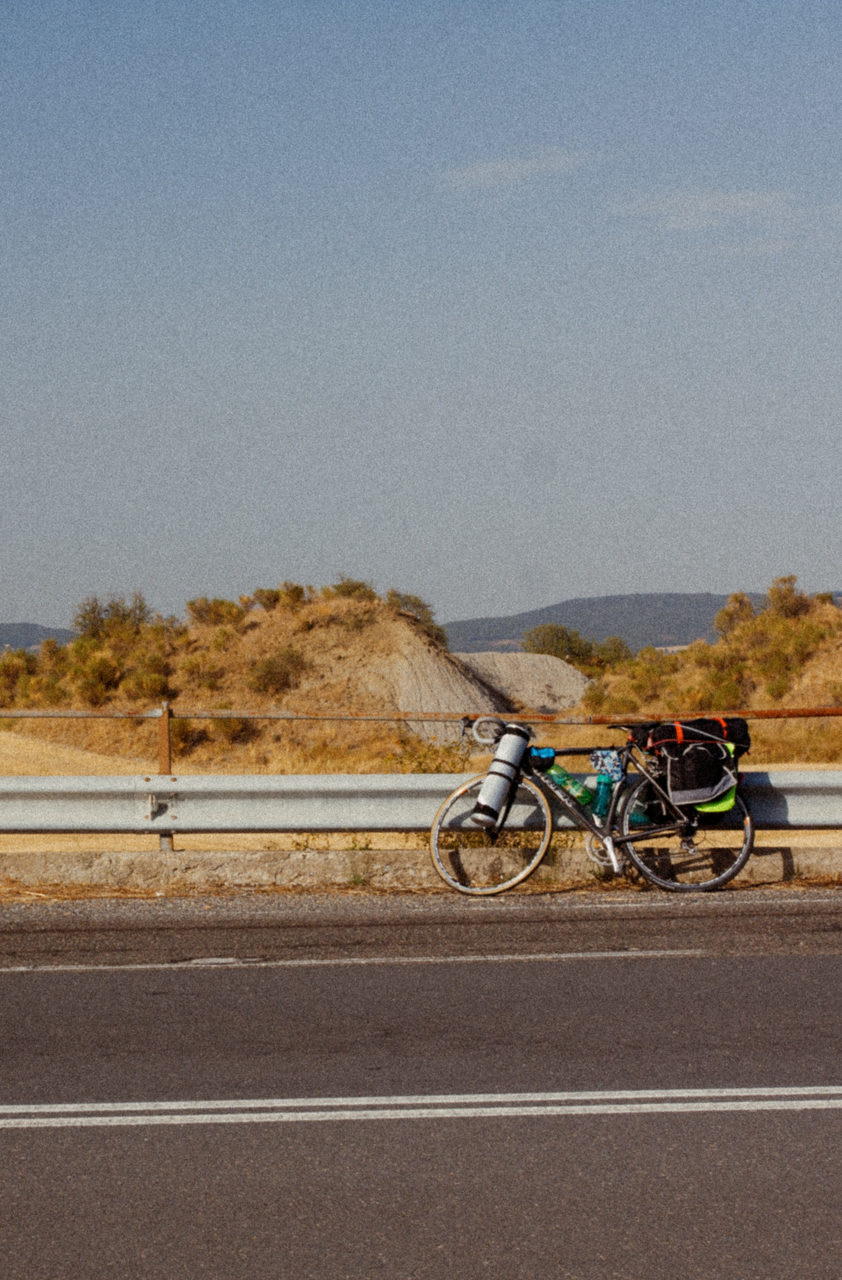
I encountered it through GPS tracks, digital maps, road signs, web pages, smartphone batteries, and uncertain local instructions. I followed a pilgrimage route with contemporary tools, and this created a tension that remained throughout the journey.
What does pilgrimage mean after GPS?
A traditional image of pilgrimage often includes slowness, prayer, poverty, uncertainty, and dependence on hospitality. The pilgrim moves through the world without complete control. The road is not only a path, but a discipline. It changes the person because it removes ordinary protections.
Modern travel tries to reduce uncertainty. GPS tells us where we are. Booking platforms promise beds. Online maps estimate time. Reviews evaluate restaurants and rooms before we arrive. Weather apps predict heat and rain. The unknown is not removed, but it is surrounded by information.
And yet, on the road, information was never enough.
A GPS line could tell me where to turn, but not whether the road was safe for a loaded bicycle. It could show distance, but not the emotional length of a climb under August sun. It could locate a town, but not guarantee water, food, kindness, or permission to sleep. It could record the journey, but not interpret it.
This is where pilgrimage continued to exist.
In 2017, I did not always know whether I had the right to call myself a pilgrim. I was not walking. I was not always carrying the correct documents. I was not always spiritually focused. Sometimes I was more concerned with hunger than prayer, more concerned with road safety than medieval history, more concerned with a bed than with transcendence.
But perhaps this uncertainty itself belongs to modern pilgrimage.
The contemporary pilgrim may not be pure. He may carry devices, cameras, bank cards, online maps, and mixed motives. He may be moved by faith, curiosity, exhaustion, aesthetic desire, academic interest, or personal crisis. The road does not require one motive only. It receives the mixture.
The Via Francigena revealed itself to me not as a continuous sacred corridor, but as a fragmented infrastructure. Sometimes it appeared as a sign beside a road. Sometimes as a path through vegetation. Sometimes as a hostel rule. Sometimes as a memory attached to a church, a hill, a town, or a refusal. It was historical, but also ordinary.
This ordinariness is important.
If pilgrimage is imagined only as a beautiful spiritual experience, then the actual road will disappoint. The real road includes traffic, bureaucracy, heat, mistakes, closed doors, bad asphalt, confusion, and the need to wash clothes. But these are not interruptions of pilgrimage. They are the material through which pilgrimage happens.
GPS did not destroy this experience. It changed its form.
Because the journey was recorded, it could later be revisited. The route became data. The data became an archive. The archive made it possible to connect memory with coordinates, photographs with time, and reflection with movement. A medieval pilgrim left traces in documents, relics, stories, or institutional records. A contemporary pilgrim leaves KML files, JPEG images, timestamps, and fragments of digital correspondence.
This does not make the journey less human. It makes the human trace more complex.
The danger is that digital traces may create an illusion of mastery. Because the route is recorded, we may think it is understood. Because the map is precise, we may forget that the experience was uncertain. Because the photograph is clear, we may forget the fatigue behind it.
Kinesis & Praxis tries to resist this illusion.
The project uses GPS not to flatten pilgrimage into data, but to show that data itself needs interpretation. The map is not the journey. It is a structure through which the journey can be remembered, questioned, and read again.
Pilgrimage after GPS is therefore not a contradiction. It is a new condition. The road remains old, but the traces have changed. The body still suffers, but the suffering can now be geolocated. The pilgrim still depends on hospitality, but the search for hospitality may pass through screens. The journey still transforms, but its memory can be rebuilt through code.
Perhaps this is the strange form of pilgrimage now: ancient roads, modern devices, imperfect motives, and the continuing hope that movement can still change the self.
No Comments